

Let’s talk about colorectal cancer.


Diagnosis and what to expect
See how doctors diagnose CRC.
CRC often develops from polyps that grow on the colon’s inner lining. Some polyps can become cancer, usually over a period of 10 to 15 years. CRC may first appear as blood in the stool or changes in bowel habits.
To make a diagnosis, doctors will use tests such as a biopsy and possibly biomarker testing.
Have you asked about biomarker testing?
Biomarker testing can help your care team design a treatment plan tailored to you. We’ll help you build a discussion guide you can take to your next visit.


Not all CRC types are the same.
Once diagnosed, doctors look at where the cancer started and certain features to determine the type. They may further determine type through biomarker testing.
While treatment usually depends on the cancer’s stage, factors like biomarkers and the specific cancer type also play a role.
Here are some, but not all, of the types you may hear about.
Adenocarcinoma
These tumors start in the tissue of the colon or rectum and make up over 90% of all CRC cases.
Adenocarcinoma has several sub-types, based on things like biomarker status or how the cancer cells look. These sorts of traits can impact your treatment plan.
Other types of CRC
- Neuroendocrine tumors (NET)
- Primary colorectal lymphoma
- Gastrointestinal stromal tumors (GISTS)
- Leiomyosarcomas
- Squamous cell carcinomas
- Familial adenomatous polyposis (FAP)
Your tumor type, biomarker status, how much the cancer has spread, and how the cancer cells look, will impact your treatment plan.
Understand CRC stages.
A stage defines how far the cancer has grown or spread, from early-stage to more advanced.
The TNM system helps determine the stage. It looks at tumor size (T), whether cancer is in lymph nodes (N), and whether it has spread to other parts of the body, or metastasized (M).
You may also hear about the cancer’s grade. A grade describes how normal or abnormal the cancer looks. Normal-looking cancers tend to be less aggressive, and grow more slowly, than abnormal-looking cancers.
Knowing your stage and grade helps you understand your cancer and helps guide your doctor’s treatment decisions.
Stage 0
Abnormal cells are found within the innermost lining of the colon or rectum.
Stage 1
Cancer has grown deeper into the lining of the the colon or rectum but has not spread beyond that.
Stage 2
Cancer has grown through the colon or rectum wall but has not spread to nearby lymph nodes.
Stage 3
Cancer has spread to nearby lymph nodes but not to distant parts of the body.
Stage 4
Cancer has spread to distant parts of the body. This is called metastatic colorectal cancer.
Ways to work with your care team
From questions to clarity, your doctor can help.
Diagnosis, testing, and treatment types can bring lots of questions. We can help prepare you to get the most out of your conversations.


Get answers about your diagnosis.
- What type of cancer do I have?
- Has it spread or grown?
- What stage is my cancer?
Talk about your treatment plan.
- What types of treatment are used for my cancer?
- If biomarker testing was done, how do the results impact my treatment plan?
- What are the goals of my treatment plan?
[Get more treatment questions](https://pfizerforallcomna-main-page.web.pfizer/cancer/prepare-for-care?open-accordion-card=2)
Ask about support and resources.
- What support services are available?
- Who can help me navigate care and next steps?
- Who on my care team can I reach out to when I have questions?


We’re committed to helping you afford your Pfizer prescriptions.
From co-pay cards to help navigating insurance approvals, we’ll guide you to the right support. And if you’re eligible for our programs, we’ll help you get the Pfizer medicines you need.


You could help advance a breakthrough.
Clinical trials study the safety and efficacy of potential new medicines, including cancer treatments.
Living with cancer
Get a little inspiration.
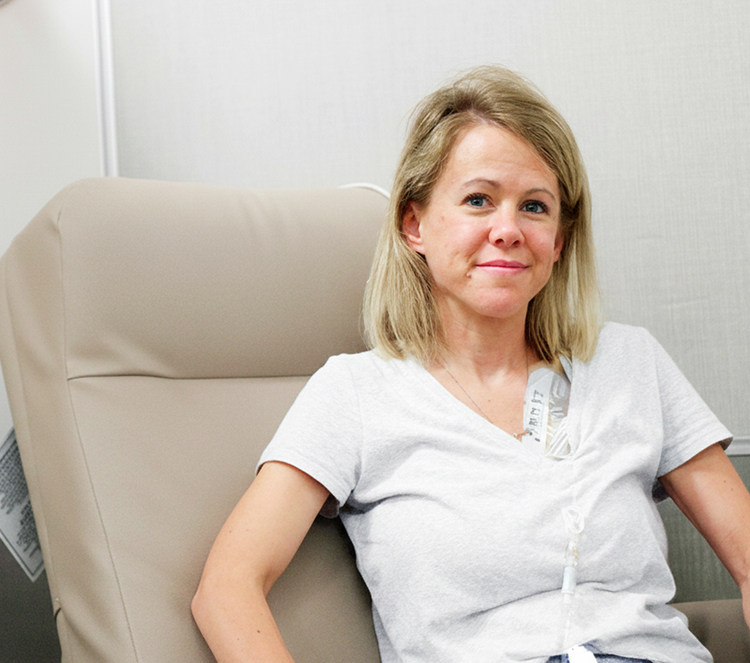

I want to make it a positive experience. And hopefully when my son is an adult he'll look back and be proud of the way his mom handled it.”
Lindsay
Actual patient with CRC


When I'm playing music, my mind is occupied with what I'm doing, so it can't be occupied with thinking about my cancer.”
Billy
Actual patient with cancer