

image
image mobile
content

Diagnosis and what to expect

See how doctors diagnose bladder cancer.

Bladder cancer often begins in the inner lining of the bladder. It may first appear as blood in the urine as or other urinary changes.

To make a diagnosis, your doctor will likely perform tests such as a cystoscopy, which allows them to look inside the bladder, and a biopsy to collect a small tissue sample.

buttons
list

Biopsy

For bladder cancer, a biopsy is often done during a cystoscopy. Your doctor removes a small tissue sample and examines it more closely to confirm a diagnosis and understand the cancer.

list

Biomarker testing

Biomarkers are signals in tumor cells that can show how cancer may change, grow, or respond to treatment. Biomarker testing may be done at the same time as a biopsy.

content

Have you asked about biomarker testing?

Biomarker testing can help your care team design a treatment plan tailored to you. We’ll help you build a discussion guide you can take to your next visit.


Get started

Take a deeper look at biomarkers

media
https://pfizerforallcomna-main-page.web.pfizer/assets/videos/dna-strand-rotated-normal.mp4
relief-media
https://pfizerforallcomna-main-page.web.pfizer/assets/videos/relief-mode/00-render-rotation-relief.mp4
poster
relief-poster
controls
false
autoplay
true
loop
true
no-track-video
true
content

Not all bladder cancers are the same.

Once diagnosed, doctors look at where the cancer started and certain features to determine the type. They may further determine type through biomarker testing.

While treatment usually depends on the cancer's stage, factors like biomarkers and the specific cancer type also play a role.

Here are some of the types you may hear about.

card

Types of bladder cancer

Doctors often describe bladder cancer based on the type of cells where the cancer begins.

Urothelial carcinoma
About 90% of bladder cancers are urothelial carcinoma. These cancers begin in the bladder’s inner lining, called the urothelium, and are also known as transitional cell carcinoma (TCC).

Other types of bladder cancer

  • Squamous cell carcinoma
  • Adenocarcinoma
  • Small cell carcinoma
  • Sarcoma
card

How the cancer has grown

Doctors also group bladder cancer based on how deeply it has grown into the bladder wall.

Non-muscle invasive bladder cancer (NMIBC)
Cancer that has not grown into the muscle layer of the bladder wall. NMIBC is the most common form of bladder cancer and is often treated with procedures and therapies delivered directly into the bladder.

Muscle-invasive bladder cancer (MIBC)
Cancer that has grown into the muscle layer of the bladder wall. MIBC often requires more aggressive treatment because the cancer has grown into the bladder muscle.

content

Explore treatment types

There’s more than one way to treat bladder cancer.

Your bladder cancer treatment plan may include more than one type of treatment and will depend on a few factors:

  • The type of cancer you have
  • The stage and grade of your cancer
  • Your biomarker status
  • Your overall health, including your age and any previous or current health conditions you’ve had or are managing

Knowing about different treatments helps you talk about them with your doctor and take an active role in your care.

Remember to ask about the side effects, risks, and benefits of any cancer treatment.

card

Surgery

Surgery is often used to remove tumors from the bladder. In some cases, part or all of the bladder may be removed, depending on how far the cancer has grown. If this happens, your care team will talk with you about options for how your body can store and pass urine.

card

Radiation therapy

Radiation therapy uses high-energy rays to destroy cancer cells. It is often used after surgery to lower the risk of the cancer coming back. Different radiation techniques may be used depending on a person’s treatment plan.

Radiation may be used in combination with chemotherapy.

card

Chemotherapy

Chemotherapy, or chemo, uses a combination of two or three powerful medications to attack and stop cancer cells from growing. It can also kill some healthy cells, which is why people may experience side effects, like hair loss.

Typically a fluid delivered into a vein (IV), it may also be given as an injection, pills, or applied to the skin.

Sometimes chemo is used before surgery to shrink the tumor and help make surgery possible. It may also be used after surgery or to treat more advanced bladder cancer.

card

Immunotherapy

A therapy that boosts your body’s own immune system to fight cancer. Immunotherapy may be used before surgery depending on the stage of the cancer or whether certain gene mutations are found. In some cases it may be used to shrink the cancer which helps make surgery possible.

card

Targeted therapy

Targeted therapy is designed to act on specific features of cancer cells, such as proteins or gene changes identified through biomarker testing, although it can also affect some normal cells. It’s also called personalized or individualized therapy and is used alone or with chemo.

Targeted therapy is usually given as a pill but can also be an infusion (IV) or injection.

card

Clinical trials

If available treatments aren’t a fit for your particular cancer, participating in a clinical trial may be right for your situation. Clinical trials study the safety and efficacy of potential new medicines, including cancer treatments. Your doctor can tell you about the benefits and risks, and whether taking part in a clinical trial is right for you.

Explore clinical trials

content

Ways to work with your care team

From questions to clarity, your doctor can help.

Diagnosis, testing, and treatment types can bring lots of questions. We can help prepare you to get the most out of your conversations.


Get ready

media
https://pfizerforallcomna-main-page.web.pfizer/assets/videos/poc/media_18283ed0c96fc84bc8de2af11fefc7a402b161542.mp4
relief-media
https://pfizerforallcomna-main-page.web.pfizer/assets/videos/poc/media_13e1de3907220cb56fc44e2a3ab7db5d3f25ead6a.mp4
poster
relief-poster
controls
false
loop
true
autoplay
true
no-track-video
true
question
Unsure what to ask? Let’s get you started.
option1
Diagnosis
option2
Treatment
option3
Support
answer1

Get answers about your diagnosis.

  • What type of cancer do I have?
  • Has it spread or grown?
  • What stage is my cancer?

Get more diagnosis questions

answer2

Talk about your treatment plan.

  • What types of treatment are used for my cancer?
  • If biomarker testing was done, how do the results impact my treatment plan?
  • What are the goals of my treatment plan?

Get more treatment questions

answer3

Ask about support and resources.

  • What support services are available?
  • Who can help me navigate care and next steps?
  • Who on my care team can I reach out to when I have questions?

Get more support questions

image
image mobile
content

We’re committed to helping you afford your Pfizer prescriptions.

From co-pay cards to help navigating insurance approvals, we’ll guide you to the right support. And if you’re eligible for our programs, we’ll help you get the Pfizer medicines you need.


buttons
Explore ways to save
image
Image mobile
content

You could help advance a breakthrough.

Clinical trials study the safety and efficacy of potential new medicines, including cancer treatments.

buttons
Explore clinical trials
content

Living with cancer

Get a little inspiration.
Card(quote)

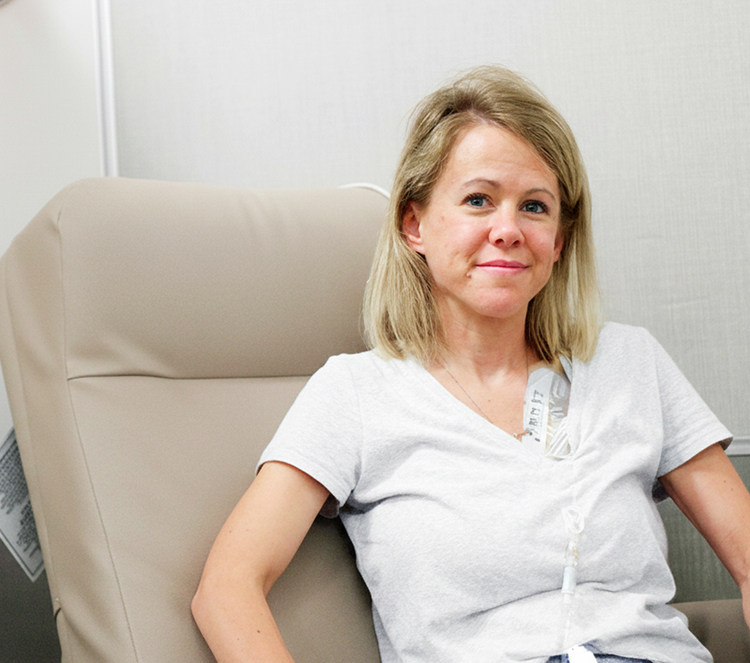
I want to make it a positive experience. And hopefully when my son is an adult he'll look back and be proud of the way his mom handled it.”

Lindsay

Actual patient with CRC

Card(quote)

When I'm playing music, my mind is occupied with what I'm doing, so it can't be occupied with thinking about my cancer.”

Billy

Actual patient with cancer

content

Still have questions?

card

What are targeted therapies?

Targeted therapies are treatments that target the ways cancer cells grow, divide, and spread. One of the ways doctors determine if targeted therapies make sense in a treatment plan is through biomarker testing.

Find out more about biomarker testing

card

What if there aren’t any targeted therapies for my cancer?

If there aren’t any targeted therapies, your doctor may recommend traditional treatment methods like chemotherapy, radiation, or surgery. There may also be potential clinical trials available to you.

Explore clinical trials

card

What can I do if I’m having trouble affording my medicine?


Managing treatment costs and paying for your medicine can be overwhelming. We’ve got resources on how to help manage costs and information on where you may be able to find financial support for Pfizer medications.

Get help navigating costs

card

Can I still go to work if I’m getting cancer treatment?

About half of people living with cancer are at an age where they’re still working. If you’re one of them, you may be wondering about how to talk to your co-workers about what you’re going through, what you need, and your ability to do your job. We’ve got you covered.

Communicating what you need at work

Getting back to work after treatment

card

Are there communities and advocacy groups I can join?

There are many patient advocacy and support groups in the bladder cancer community. Here are a couple to get you started with connecting to other patients and caregivers, as well as resources to support you during your journey:

www.bcan.org

www.mybladdercancerteam.com

card

When should I seek a second opinion?

Getting a second opinion is a common process that can give you peace of mind. You may want or need a second opinion because:

  • You have a rare type of cancer and want to be sure of your diagnosis
  • Your doctor gives you limited treatment options, and you think other treatments might be available at a different medical center
  • Your doctor is not a specialist in your type of cancer
  • Your doctor tells you there is uncertainty about your type or stage of cancer
  • You’re having trouble understanding and communicating with your doctor, or you want your options explained by someone else
  • You feel uncomfortable with your doctor and their ability to answer your questions or give you the time you need
  • Your insurance company asks you to get another opinion before you start treatment
  • You want to feel confident in your treatment plan