

Hemophilia
Every hemophilia journey is different. We’ll help guide you.


What is hemophilia?
It starts with missing clotting factors.
Hemophilia is a condition that causes excessive bleeding from minor injuries. It can even cause spontaneous bleeding. Bleeding occurs due to missing clotting factors.
There are 12 factors in the blood that help the clotting process. Each is referred to by a Roman numeral. People living with hemophilia don’t have enough, or any, of clotting factor VIII or IX. This can lead to unexpected bleeding or bleeding that doesn’t stop.
There are 2 main types of hemophilia.
Hemophilia A and hemophilia B both affect the ability to form normal clots. There are some key differences to be aware of.
Hemophilia A
Marked by low or missing levels of clotting factor VIII. This is the most common type and is sometimes called “classic” hemophilia. It affects about 1 in 5,000 men and some women.
About 20% of those with hemophilia A develop inhibitors. It happens when the immune system blocks, or inhibits, the action of certain kinds of treatment. It's uncommon, but it can affect the treatment choices made by your care team.
Hemophilia B
Marked by low or missing levels of clotting factor IX. This type is less common and affects about 1 in 20,000 men and some women. It’s also called Christmas disease after Stephen Christmas, the first patient diagnosed with hemophilia B.
About 3% to 5% of people living with hemophilia B develop inhibitors.
Hemophilia is classified by its severity level.
It can be mild, moderate, or severe depending on the amount of clotting factor in the blood. Severity levels are the same for both types and help guide your care team's treatment choices.
theme-core-seed
Severe
Less than 1% of factor VIII or IX
- Bleeding is often spontaneous, without injury
- When untreated, joint and muscle bleeding occurs repeatedly, causing damage and pain
- Frequent treatment to prevent bleeding, and on-demand treatment to help stop bleeding, are recommended
theme-core-light
Moderate
1% to 5% of factor VIII or IX
- Bleeding can sometimes be spontaneous, without injury
- Bleeding occurs after minor injuries, shots or vaccinations, or surgery
- Infrequent joint bleeding
- Treatments that prevent bleeding, and on-demand treatment to help stop bleeding, are recommended
theme-core-lighter
Mild
More than 5% but less than 40% of factor VIII or IX
- Bleeding occurs after injury
- Spontaneous bleeds are unlikely
- Many treatments are available. Treatments that prevent bleeding aren’t recommended since bleeding is not spontaneous
How hemophilia is commonly passed on
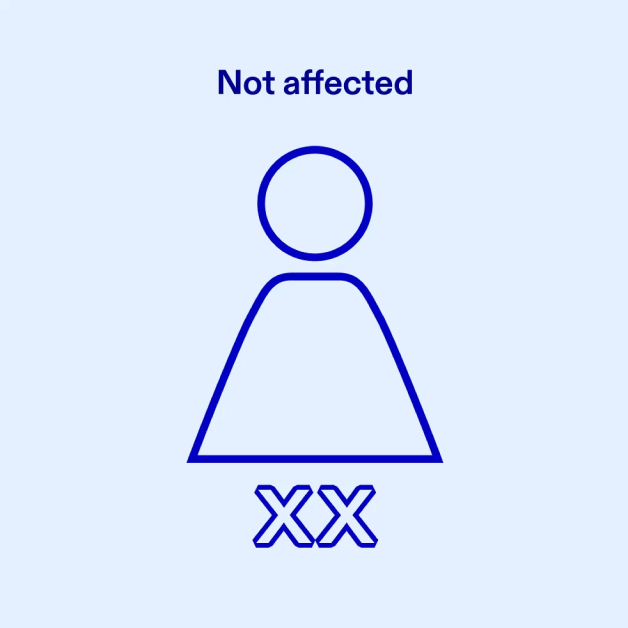
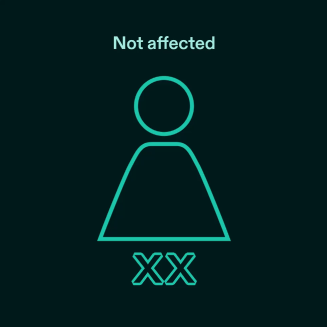
It’s passed on through the X chromosome.
Chromosomes are the structures that carry individual genes, including the genes that cause hemophilia. There are two types of sex chromosomes, X and Y.
- Men have one X chromosome from their mother and one Y chromosome from their father
- Women have two X chromosomes, one from each parent
If the X chromosome from either parent carries a gene that causes hemophilia, there’s a chance that a child will have hemophilia or carry the gene.


It could be time to talk to your doctor.
Starting a conversation about the latest hemophilia treatments could help you move forward.
Sign up to get hemophilia guidance.
form_builder_uat_2334
form_builder__production__2334__wd
Thanks for
your interest.
You’ve been subscribed.
Still have questions?
What are the signs of internal bleeding?
Internal bleeding is serious. Seek immediate help if you or your child has signs of:
- Brain bleeding, including headaches, sleepiness, and seizures
- Joint and muscle bleeding that causes pain or swelling or joints that feel hot
Also seek help for uncontrolled external bleeding. You can find out more about getting and preparing for care here.
Is there a cure for hemophilia?
Hemophilia is a lifelong, chronic condition that can be managed. There isn’t a cure but treatments continue to evolve. Talk to your care team about how prophylactic treatment may improve factor levels, prevent excessive bleeding, and reduce the risk of joint problems.
Is hemophilia a dominant or recessive genetic condition?
It’s actually an “X-linked” recessive genetic disease. Here’s how it works.
People get two copies of a gene, one from each parent. Genes can be dominant or recessive. If one gene is dominant and the other is recessive, the dominant trait usually “wins.”
A child will have the recessive trait if they inherit two copies of the recessive gene.
Hemophilia is recessive because for a woman to inherit the condition, she would need two copies of the recessive gene. It’s different for men because the gene is inherited only through the X chromosome.
Women who carry the gene have a second X chromosome that helps produce enough clotting factor. Still, those who carry the gene can experience some milder hemophilia symptoms and some women will have hemophilia.
What can I do if I’m having trouble affording medicine?
Managing treatment costs and paying for medicine can be overwhelming. We’ve got resources on how to help manage costs and information on where you may be able to find financial support for Pfizer medications.